


It was a beautiful day on May the 1st, when we went sailing with some friends and family. The boat took us just outside Reykjavik. I’m not the world’s greatest photographer – I hope you enjoy the photos regardless!

It was a beautiful day on May the 1st, when we went sailing with some friends and family. The boat took us just outside Reykjavik. I’m not the world’s greatest photographer – I hope you enjoy the photos regardless!
Meet the backup browser.
We’ve put together a brand new way to restore your files within a backup. The new backup browser features individual file restores and file previews along with some behind-the-scenes magic to make everything generally faster. Now, you can preview a file to make sure it’s the one you need before you restore it.
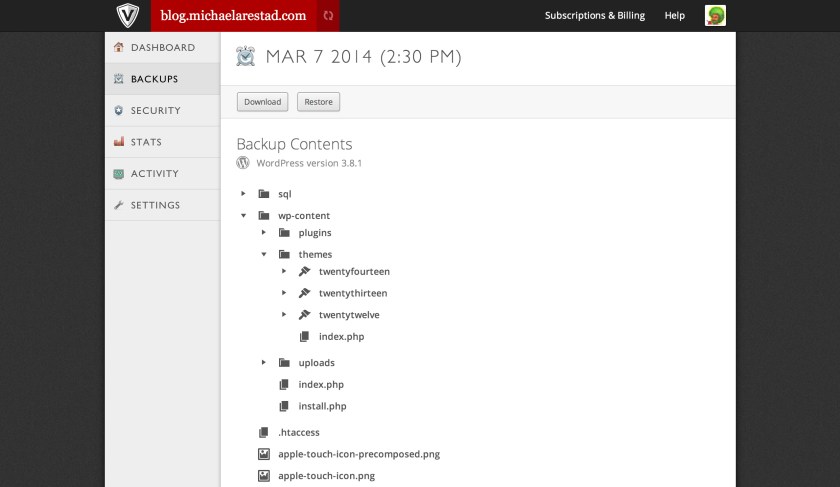
Even if you don’t need to restore anything, the backup browser is a pretty cool way to dig through some of your WordPress files and check them out. It has text file, image, and video previews, so it’s super easy for you to find and restore that awesome .gif your editor deleted.
Now, when you click “View Backup,” you can either restore or download files instead of having to download or restore the entire backup. Pretty handy, right?
View original post 113 more words
Simperium is a cross platform framework that allows you to seamlessly sync data through multiple devices.
Tic Tac Toe is one of the simplest games you can possibly think of: two players take turns to place a piece (either a cross or a circle) on a 3×3 matrix. The first player that succeeds in placing three marks in either a horizontal, vertical, diagonal or antidiagonal wins the game.
We have built a single-device Tic Tac Toe game for iOS: source code available here. In this tutorial we’ll be learning how to integrate the Simperium framework, and how to enable multi-device data synchronization without writing a single line of backend code.
Our approach to implement the data model will be straight forward. We will maintain two collections:
Players:
Each player will have a unique ID, and will make sure that as long as the app is active, its uniqueID will be present…
View original post 636 more words
No matter where you are in the world, you’ll find people working on WordPress.com: Developers deploying lines of code. Designers tinkering with themes. Engineers working one-on-one with users to help make their websites just so. (Want to join in? We’re hiring.)
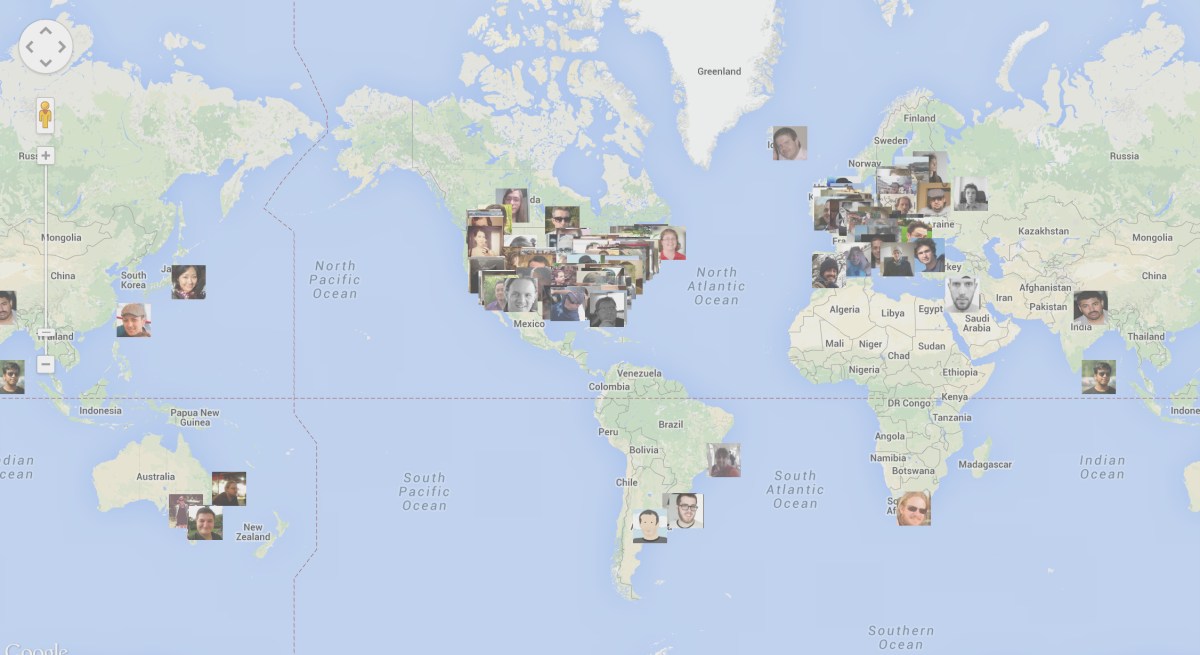
One cool thing about Automatticians? We care about WordPress.com so much that we’re always thinking about ways to make it better, online and off. Here’s a glimpse at the 230 Automatticians around the globe — and things we’re working on and thinking about right now.
At Automattic, we’re constantly communicating, breaking and fixing, and iterating and improving. Communication tools like the P2 theme, Skype, and IRC channels allow ideas and conversations to flow at all times, while our own blogs are spaces to reflect on and share the things we’ve learned.
In Moscow, Code Wrangler Konstantin Kovshenin works on the Dot…
View original post 745 more words
What a year!
With 2013 behind us, we can now take a look at our community’s incredible accomplishments over the past year. Here’s the year that was on WordPress.com.
That’s a 36% increase from 2012, during which you created 10 million new blogs.
That’s 12 times the number of books in the Library of Congress!
That’s an average of 21 comments per second for the entire year.
comments since you’ve been
on this page.
That’s almost 38,000 times the number of stars on the Hollywood Walk of Fame.
You’ve written about thousands of topics in 2013. Here are the top ten:
View original post 320 more words
I stayed at the Hotel 1000 in Seattle last weekend. It was quite pleasant and I was going to give it a good rating and recommend it to friends and colleagues.
Then I logged into my LinkedIn profile and found this:

The more I think about it, the more it bothers me. When travelling and staying at hotels, I expect the hotels to respect my privacy.
Dear Hotel 1000, this is simply not cool. I hope this is not common practice at your hotel, as a guest I find this extremely creepy.
p.s. I mailed the hotel a link to my post at the same time as I posted it.
Money talks, and sometimes even walks 🙂
Twitter went mad last week because somebody had transferred almost $150m in a single Bitcoin transaction. This tweet was typical:
There was much comment about how expensive or difficult this would have been in the regular banking system – and this could well be true. But it also highlighted another point: in my expecience, almost nobody actually understands how payment systems work. That is: if you “wire” funds to a supplier or “make a payment” to a friend, how does the money get from your account to theirs?
In this article, I hope to change this situation by giving a very simple, but hopefully not oversimplified, survey of the landscape.
Perhaps the most important thing we need to realise about bank deposits is that they are liabilities…
View original post 2,350 more words
Mess with the bull – you get the horns!
The mission of WordPress.com is to democratize publishing. We’re inspired every day by the ways creators use our platform to bring their voices to the world. Unfortunately, we also see many cases of censorship aimed at WordPress.com authors and users.
One area where we’ve seen a number of problems is the censoring of criticism through abuse of copyright law. Two recentcases of abuse really caught our attention and made us think that we needed to take action to fight back on behalf of our users and everyone who believes in the internet’s promise for free expression.
A common form of censorship by copyright stems from improper use of legal creations called DMCA takedown notices. The DMCA stands for the “Digital Millennium Copyright Act,” which is a US federal law that created a system for protecting copyrights online. The DMCA system works pretty well, but has a…
View original post 663 more words




 egill.blog
You must be logged in to post a comment.